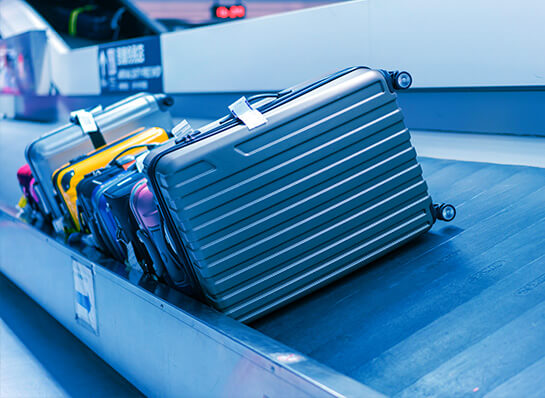
On the initiative of the European Airports Association (ACI Europe), the global Airport Carbon Accreditation Program (ACAP) has been launched with the aim of reducing CO2 emissions from airports. Energy consumption by baggage handling systems is not yet included in this program, but could significantly reduce the carbon footprint of airports.
In addition to the ACAP's findings, this publication examines the energy consumption of belt conveyors used in baggage handling systems and highlights the optimization potential of the components used. In addition, our experts analyzed countless discussions with machine builders, system planners, and end customers and came to the conclusion that everyone involved in dimensioning their systems builds in safety buffers. This ultimately has a massive impact on overall efficiency and costs, the more parties are involved. The greatest potential for savings lies in the coefficient of friction between the conveyor belt and the slide table, followed by the energy efficiency of the drive train.
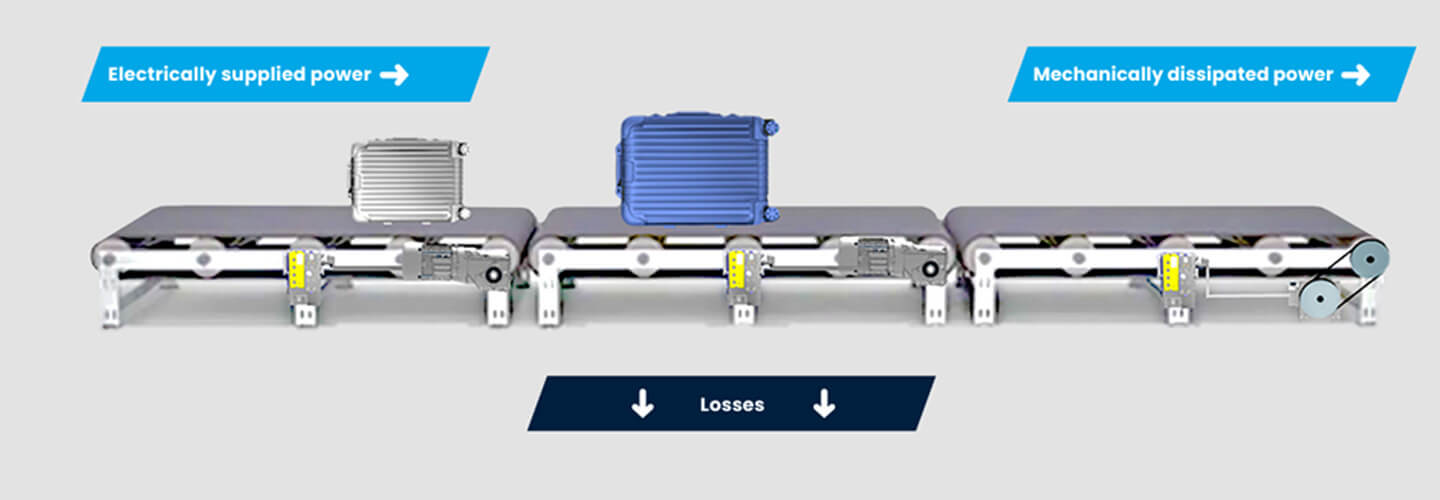
Measurements in the laboratory and at airport facilities prove that by using appropriate conveyor belt types with low coefficients of friction and a drive train design tailored to requirements, energy savings of over 40% can be achieved for the entire conveyor.
Good to know:
Baggage handling systems (BHS) are automated systems at airports that transport suitcases from check-in through security checks to the aircraft and, upon arrival, to the baggage carousel. They increase efficiency through conveyor belts, sorters (tilting trays), RFID tracking, and storage solutions.