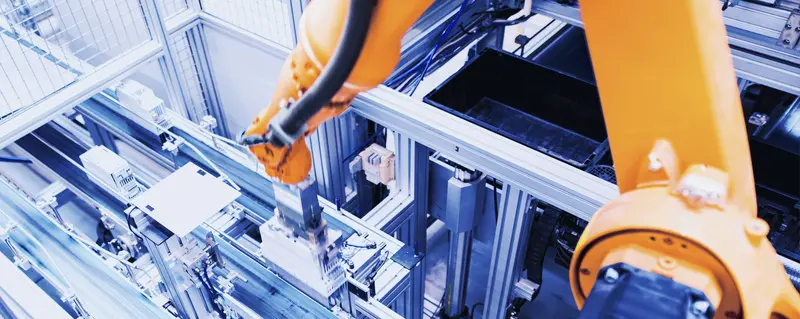
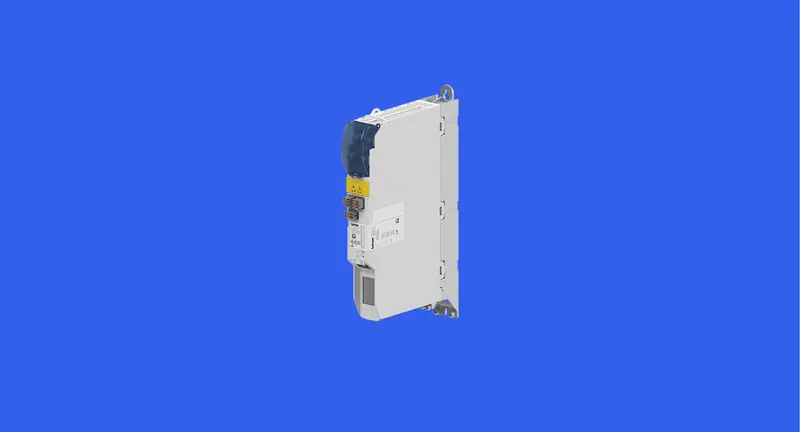
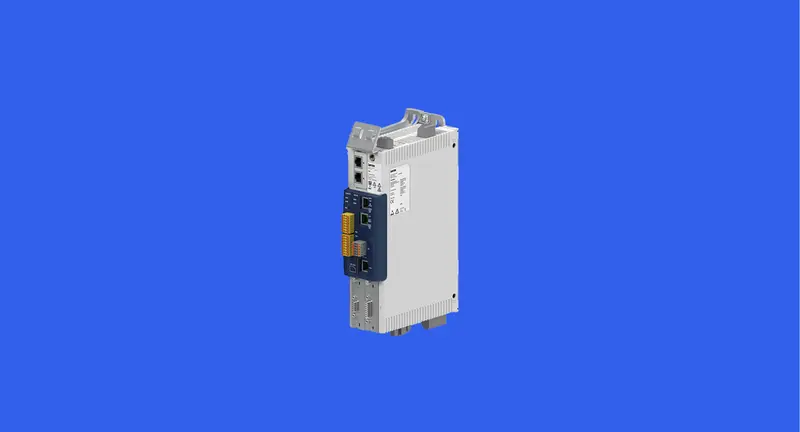
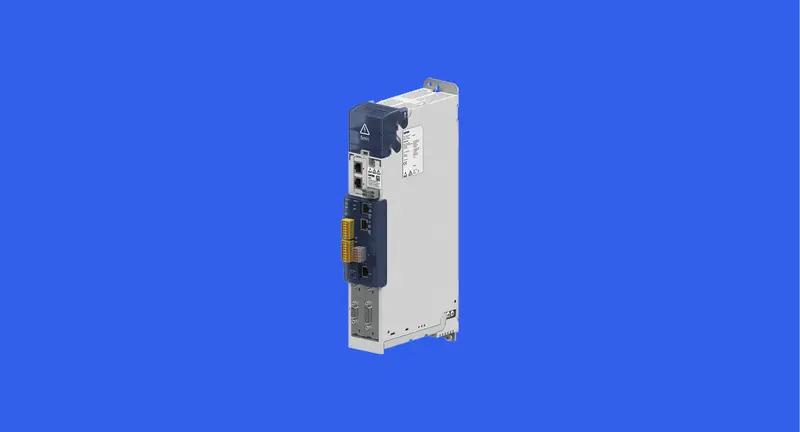
Servo drives i750 cabinet DC-Link, i950 cabinet, and the i950 cabinet DC-Link
The right servo architecture for your machine
Whether it’s a highly dynamic handling application, a precise positioning task, or complex multi-axis motion: With the i750 cabinet servo drive, i950 cabinet servo drive, and i950 cabinet DC-Link servo drive, you can implement high-performance motion control applications— from compact axis networks to intelligent servo platforms.
Lenze combines precise drive technology with integrated engineering software, flexible system integration, and comprehensive application expertise. This enables you to develop machines with high dynamics, precise motion control, and reduced engineering and installation effort.
High control accuracy supports precise positioning, path, and synchronized movements in demanding motion-control applications.
Accelerating engineering
EASY Engineering Tools, auto-tuning, and preconfigured technology applications simplify design, controller setup, and commissioning.
Scaling machine architecture
From centrally controlled axis networks to intelligent DC-link systems: The servo platform supports a variety of power, control, and machine concepts.
Integrate in an open and forward-looking way
Fieldbuses, established drive profiles such as CiA 402 and PROFIdrive, integrated safety functions, and modern feedback systems facilitate integration into various automation environments.
What sets the Lenze i750 and i950 servo drives apart?
The Lenze i750 cabinet servo drive, i950 cabinet servo drive, and i950 cabinet servo drive control precise, dynamic, and synchronized movements in modern machines. They support a variety of machine architectures: from compact, centrally controlled multi-axis systems to intelligent single drives and high-performance DC-Link platforms.
Thanks to EASY Engineering Tools, Auto-Tuning, FAST technology applications, One Cable Technology, and flexible communication interfaces, servo axes can be efficiently designed, integrated, and put into operation.
Which servo drive is right for your machine architecture?
Not every machine has the same requirements for its drive technology. Three questions are particularly important for making an initial selection: How many axes work together? Where is the motion logic executed? Is a shared DC link required?
Three servo platforms for different machine designs
Choose the i750 cabinet DC-Link when you need to control multiple servo axes compactly, quickly, and synchronously via a higher-level controller.
Single and double axes, as well as the integrated DC rail system, support a space-saving multi-axis configuration. The i750 cabinet DC-Link can be integrated into EtherCAT- or PROFINET-based systems and supports the CiA 402 or PROFIdrive drive profiles.
Flexibly distribute motion functions throughout the system
Choose the i950 cabinet if you want to use intelligent motion control functions in a centralized, decentralized, or hybrid architecture.
The servo drive can be controlled via a higher-level controller or execute motion and machine functions using its own logic within the drive. Modular communication, feedback, and I/O interfaces, as well as FAST technology applications, support flexible machine concepts and the “parameterize instead of program” approach.
Platform role: intelligent and flexibly configurable single drive
Combining Intelligence with a Compact DC-Link Architecture
Choose the i950 cabinet DC-Link if you want to combine intelligent drive functions, high power density, and a compact DC-Link architecture.
The platform combines the motion control and engineering capabilities of the i950 with an integrated DC bus system. FAST technology applications, auto-tuning, modular communication and feedback interfaces, and One Cable Technology create a scalable foundation for demanding multi-axis systems.
Platform Role: Intelligent servo platform for compact multi-axis systems
DC-Link: yes
Power range: 0.55 to 45 kW
Overload capacity: up to 400 percent
Which servo platform is right for your application?
Selecting the right servo drive depends on more than just power and interfaces. The motion task, number of axes, synchronization, and desired machine architecture are all critical factors.
The following examples provide an initial guide. The final design is based on the specific load, motion, and overload profiles.
Precise and synchronized movements for high-speed packaging processes
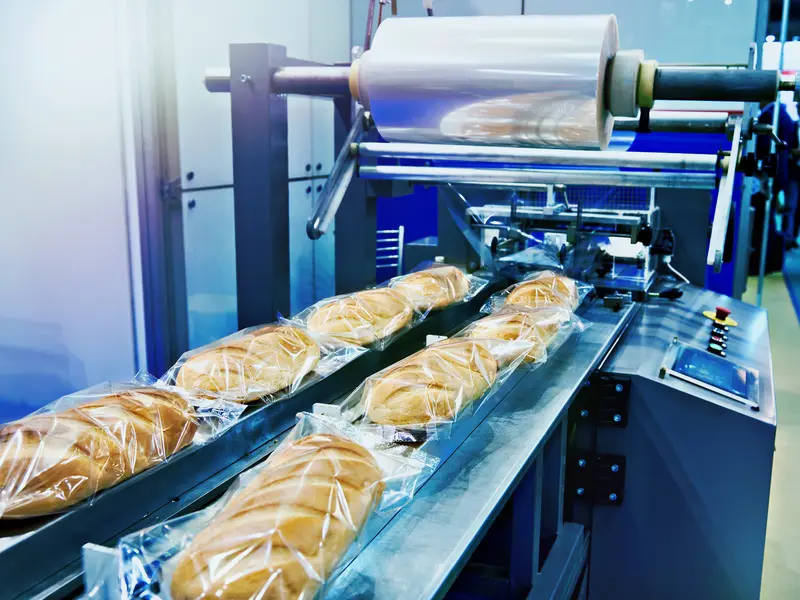
In packaging machines, the infeed conveyor, feeder, sealing axes, and outfeed conveyor must often work together in short cycle sequences. In pick-and-place applications, gripping, path, and placement movements must be fast, repeatable, and synchronized with the conveyor motion.
Primary recommendation: i750 cabinet DC-Link
Alternative for higher drive-based intelligence: i950 cabinet DC-Link
Winding and track guidance
Precisely controlling web tension, speed, and torque
In winding machines, web tension, speed, and torque must be controlled across different roller diameters and process phases. This is crucial for reproducible processes and consistent material quality.
Pre-configured technology applications for winding functions support faster parameterization and facilitate reuse across machine variants.
Primary recommendation: i950 cabinet
Alternative for compact multi-axis systems: i950 cabinet DC-Link
Printing, cutting, and finishing
Synchronizing many servo axes compactly and with high precision
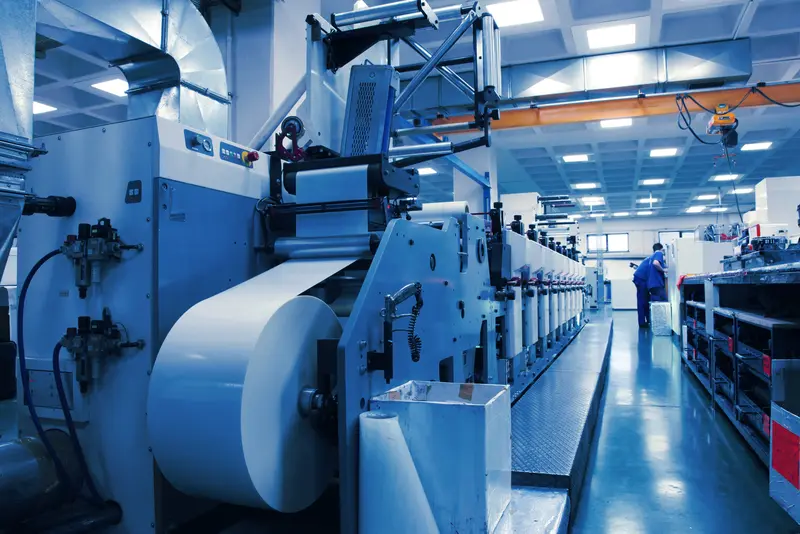
Printing, cutting, forming, and processing machines place high demands on the synchronization of multiple axes. Register accuracy, reproducible motion profiles, and rapid corrections influence product quality, scrap rates, and machine throughput.
Primary recommendation: i950 cabinet DC-Link
Alternative for centrally controlled axis groups: i750 cabinet DC-Link
Dynamic drives for storage and retrieval machines and material handling
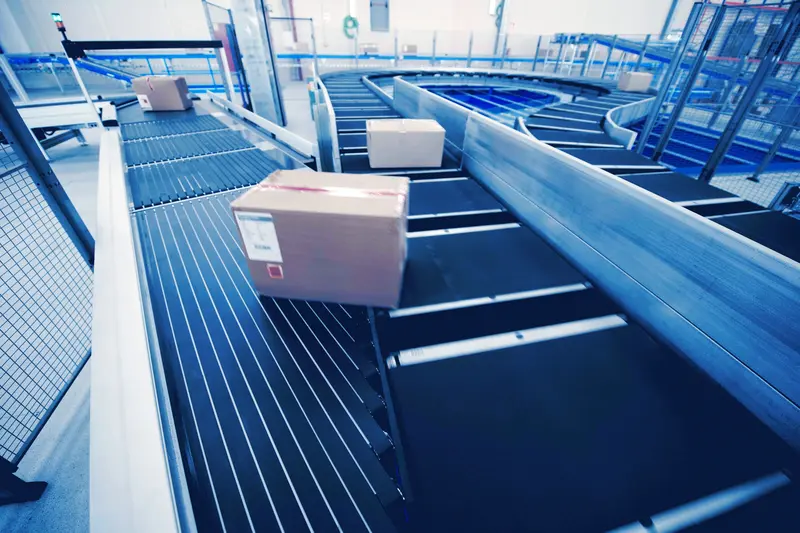
Stacker cranes require dynamic travel and lifting movements, precise positioning, and high availability. The drive architecture must be adaptable to different payloads, axis power ratings, and system designs.
Primary recommendation: i950 cabinet DC-Link
Alternative for high-performance single axes: i950 cabinet
Comparison of the i750 cabinet DC-Link, i950 cabinet, and i950 cabinet DC-Link
The table aids in preliminary selection but does not replace a technical design analysis. The final selection depends, among other factors, on the load profile, peak power, overload duration, number of axles, motor, feedback, braking concept, communication, safety, and control architecture.
*Device CRA-ready The required security functions are present in the device but are not yet enabled by default.
**Device CRA-compliant The device meets all CRA requirements, including shipment in a secure default configuration (“Secure by Default”).
One Cable Technology: fewer cables, precise feedback, easy installation
What is One Cable Technology?
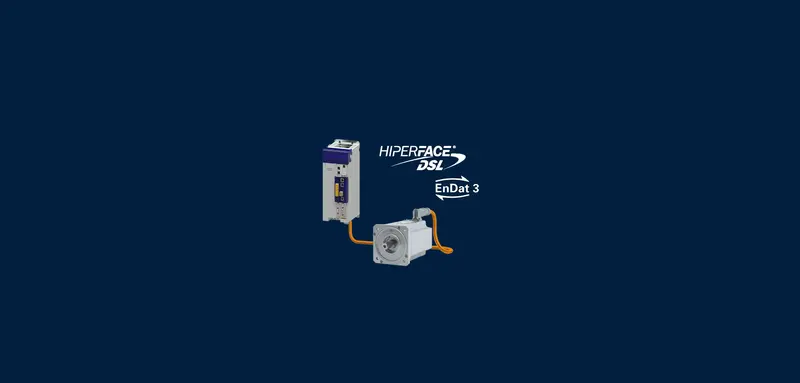
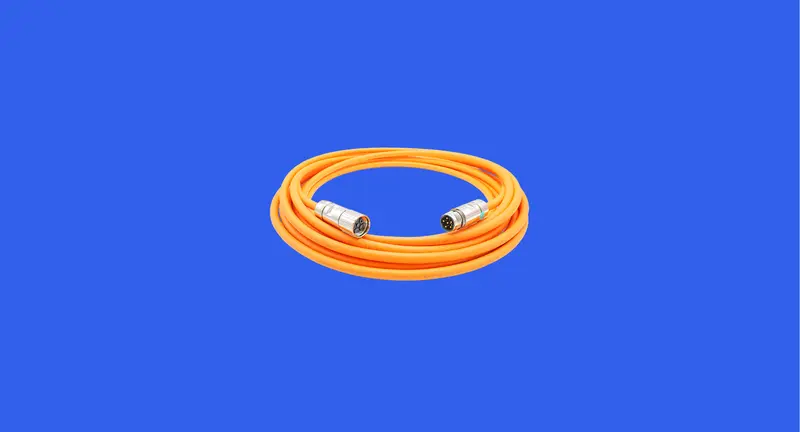
One Cable Technology, or OCT for short, transmits motor power and feedback signals via a single cable. This reduces the number of connections between the servo drive and the motor. It simplifies installation, saves space, and reduces connection complexity.
In modern servo applications, every connection counts. More cables mean more space requirements, additional variants, more connection points, and potential sources of error.
With One Cable Technology, Lenze servo drives reduce the amount of wiring required between the drive and the motor. Power and motor feedback are combined into a single connection concept. This supports a more organized machine installation and can speed up mounting and commissioning.
Motor feedback protocols such as HIPERFACE DSL and EnDat 3 enable the transmission of precise feedback information within the single-cable concept. OCT is particularly relevant when precise feedback, compact connection technology, and reduced wiring effort need to be combined.
Advantages at a glance
Fewer cables: Power and feedback in a single connection concept
Fewer connection points: reduced complexity and fewer potential sources of error
Faster installation: reduced mounting and wiring effort
Compact machine design: fewer cable routes
Precise motor feedback: Support for modern feedback protocols
Easier maintenance: fewer connections during troubleshooting and replacement
PROFIdrive: Easier Integration of Servo Drives into PROFINET Environments
What do I use PROFIdrive for?
If you’re developing machines in PROFINET-based automation architectures, you need drive technology that can be integrated in a standardized way, reliably diagnosed, and reused over the long term. PROFIdrive creates a common language between the controller, the drive, and the engineering system: The profile defines how drives in PROFIBUS and PROFINET systems are uniformly addressed, parameterized, and diagnosed.
For your machine development, this means less effort spent on interfaces, better reusability of control modules, and greater reliability in engineering—from project planning through commissioning to service. Especially in Siemens-based control environments, you benefit from a standardized connection without sacrificing the dynamics, precision, and scalability of Lenze servo drives.
Advantages at a glance
Greater connectivity of Lenze drives for open motion control concepts
Standardized profiles according to IEC 61800-7 and combinable with PROFINET profiles such as PROFIsafe and PROFIenergy
Support for speed control and positioning down to high-precision specifications in synchronized PROFINET-IRT networks
DC Rail System: A more streamlined design for multi-axis applications
How does a DC busbar system reduce the effort required for multi-axis applications?
For machines with multiple servo axes, it’s not just the performance of the individual axes that matters, but also the control cabinet architecture. DC busbar solutions help reduce the number of supply cables, create a more organized layout, and enable more efficient and cost-effective implementation of compact machine designs.
The i750 cabinet DC-Link and the new i950 cabinet DC-Link offer an integrated DC busbar system for this purpose. Since the DC busbar is identical for both devices, existing architectural principles can be consistently carried forward. For you, this means: less control cabinet work, reduced costs, lower installation risk, and more flexibility for compact, high-performance machine designs.
Benefits at a glance
Simplified cabling
Cost and time savings
State-of-the-art technology
Rated continuous current: 200 A DC
Same DC busbar as the i750
PE connections provided via PE hooks, as in the DC busbar system
DC adapter (for switching between racks)
Sensorless motor control: Greater flexibility in motor selection and variants
Why do I need sensorless motor control?
Sensorless Motor Control expands the possibilities for designing efficient drive concepts. Support for the SLSM-PSM motor control method and energy-efficient Lenze motor series such as the m550, m650, and IE5/IE6 provides greater flexibility in motor selection and helps reduce costs associated with operation and installation.
For machine builders, this has a particularly positive impact on engineering, procurement, inventory management, and service: Fewer additional components, reduced connection complexity, and a simpler system architecture facilitate planning and support cost-effective solutions for a variety of motion tasks.
Advantages at a glance
Consistently combinable: Servo drives can be used not only with servo motors but also with standard AC motors
Fewer drive variants: Machine designs can be configured more flexibly, reducing the number of variants
Future-proof design: Complements technologies such as EnDat 3 and modular interfaces for long-term machine concepts
Servo drive, motor, and engineering as a coordinated system
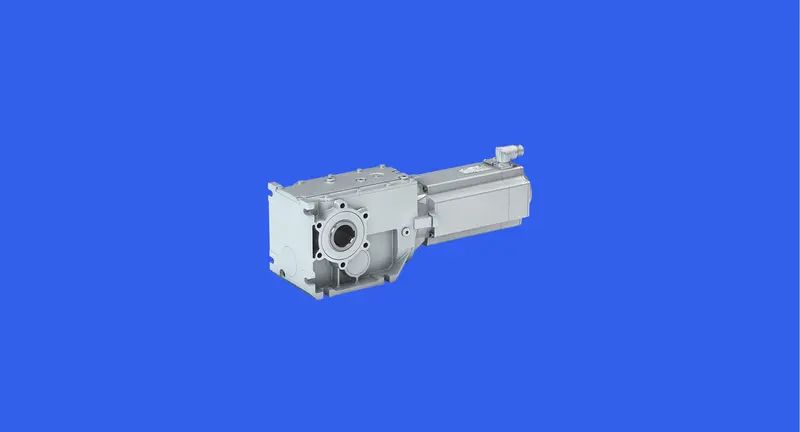
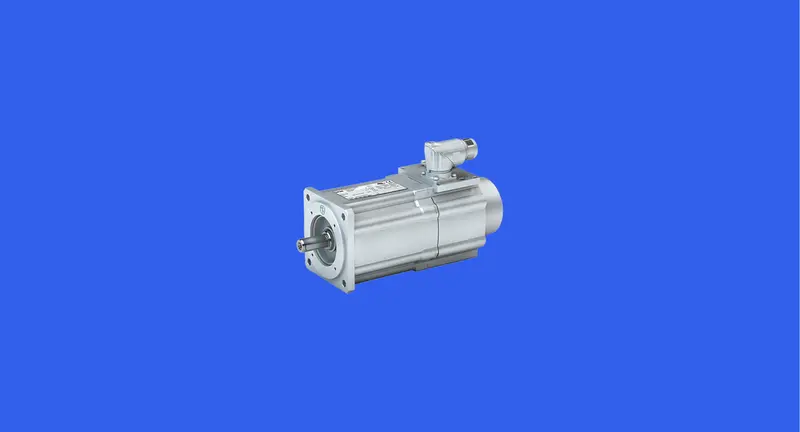
The performance of a servo axis results from the interaction of all its components. Lenze combines servo drives with servo motors, servo gearmotors, feedback systems, system cables, controllers, and engineering tools.
This reduces the number of interfaces, simplifies the design, and facilitates consistent commissioning. As a result, individual products are combined to create a scalable drive solution tailored to the specific motion task.
Tools for product selection, design, configuration, commissioning, and service.
Proven in the field: Lenze servo solutions in OEM machines
Machine builders from various industries rely on Lenze servo drives, motion control software, and customized drive systems. The following case studies demonstrate how the servo architecture performs in practice.
FOM Industrie relies on motion packages consisting of m850 synchronous motors and i750 and i950 servo drives for its high-speed saws, FMC machining centers, and LMX production lines. The drives enable positioning speeds of up to 125 m/min and standardize the automation solution across all machines.
For the automatic feeding of a finger-jointing line, Weinig Grecon uses the FAST Application Software for robotics, the c550 controller, the i750 servo drive, and MCS servo motors. The machine module achieves 80 picks per minute, and the compact hardware design reduces mounting and wiring effort.
For the past ten years, PAYPER has relied on centralized motion control solutions from Lenze: c-Series controllers combined with the i550, i950, and i700 drives, as well as pre-configured technology functions that drastically reduce development and commissioning times. The latest SCARA palletizer can handle up to 600 bags per hour.
Blowmak blow molding machines are equipped with the c550 controller, MCS servo motors, i750 cabinet servo drives, and i500 VFDs. Thanks in no small part to Lenze products, these machines are characterized by energy-efficient operation and low operating costs.
Let's find the right servo architecture for your machine
Are you designing a new machine, modernizing an existing drive architecture, or looking to integrate multiple servo axes in a more compact and efficient way?
Our experts will support you every step of the way—from the initial architectural decision through selection and design to the perfectly matched servo axis.
Technologies for a more efficient servo architecture
The technical features of the servo platform help machine builders accelerate engineering, reduce installation effort, and build open, secure machine architectures.
When is a servo drive a better choice than a VFD?
A servo drive is a good choice when a machine requires precise positioning, high dynamics, rapid torque changes, or the synchronization of multiple axes. For simple movements that are primarily speed-controlled, a VFD may be the more cost-effective solution.
Which Lenze servo drive is suitable for multi-axis applications?
The i750 cabinet DC-Link is suitable for compact, centrally controlled multi-axis applications. The i950 cabinet DC-Link is a good choice when additional intelligent drive functions, high power density, and flexible motion control capabilities are required.
What are the advantages of a DC rail system?
A DC bus system connects multiple servo drives via a common DC intermediate circuit. This reduces the number of supply cables, simplifies control cabinet designs, and enables the implementation of compact multi-axis systems.
Which motor feedback systems are supported?
Depending on the servo drive and module configuration, various feedback systems are supported. These include, among others, HIPERFACE DSL and EnDat 3. The choice depends on precision, dynamics, the motor, and the machine architecture.
What communication systems do the servo drives support?
Depending on the product, the servo drives support EtherCAT, PROFINET, CAN, PROFIBUS, and EtherNet/IP, among others. Drive profiles such as CiA 402 and PROFIdrive are also available.
What safety features are available?
Depending on the device model, safety functions up to SIL 3/PL e Category 4 and safe communication via FSoE or PROFIsafe are supported.
What should be considered regarding cybersecurity and CRA?
Machinery manufacturers should verify which cybersecurity features are integrated, what firmware is required, how updates are deployed, and which CRA requirements are met. These statements must be specific to the product, firmware, and timeframe.
How can servo drives be integrated in a standardized way into PROFINET environments?
PROFIdrive enables standardized communication between the controller, the drive, and the engineering system. The profile defines how drives are addressed, parameterized, and diagnosed in PROFIBUS and PROFINET systems.
For machine builders , this means less effort spent on interfaces, more reusable control modules, and more consistent engineering processes —from project planning through to service.
PROFIdrive is standardized in IEC 61800-7 and can be combined with PROFINET profiles such as PROFIsafe and PROFIenergy. The i750 cabinet DC-Link, i950 cabinet, and i950 cabinet DC-Link support PROFIdrive depending on the specific device and communication configuration.
How do engineering tools and auto-tuning speed up commissioning?
The EASY Engineering Tools support end-to-end processes, from product selection and design to parameterization, commissioning, and maintenance.
Auto-Tuning simplifies the adjustment of control parameters and helps adapt servo axes more quickly to mechanical conditions and load behavior. As a result, machine builders benefit from fewer tool changes, faster controller setup, and consistent engineering workflows.
What machine functions does the FAST Application Software support?
FAST provides pre-built software modules for typical motion functions:
Speed Control
table positioning
Electronic gearbox
Synchronization with mark correction
Winding functions
On the i950 cabinet and i950 cabinet DC-Link, these technology applications support the“parameterize instead of program” approach. Proven machine functions can be reused across variants and follow-on projects.
What possibilities does sensorless motor control offer?
Sensorless motor control enables the control of suitable motors without an additional motor feedback system. This can reduce the number of components and connections and provide greater flexibility in the design of cost-effective drive concepts.
Specific suitability depends on the motor, application, dynamics, positioning requirements, and control method. Sensorless motor control is therefore not the right solution for every servo application.