Question:
What influence does changing over the switching frequency have on the overcurrent operation of the 9400?
Answer:
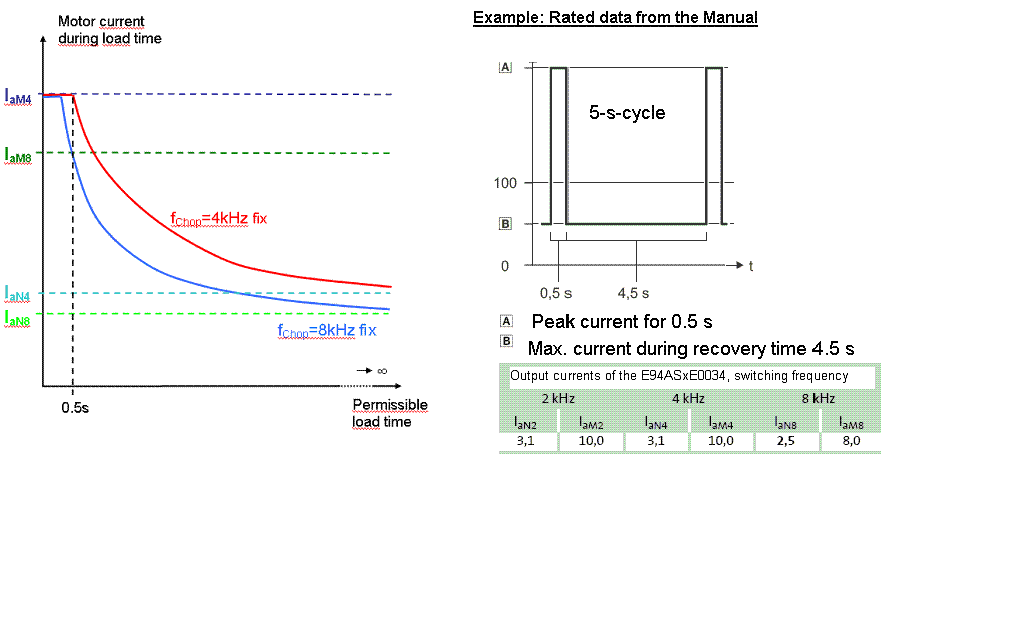
The duration of the load with peak current gets shorter with increasing switching frequency. However, the maximum device current can definitely be reached.
Example: A servo drive E94ASxE0034 has a rated current of IaN = 2.5 A and can be operated for a short time at 4-times overcurrent, i. e. IaM = 10 A. At a fixed switching frequency of fChop = 4 kHz, the inverter can be operated permanently with this overcurrent in the familiar 5-second cycle (0.5 seconds load with peak current and then 4.5 seconds recovery time with limited current). If the required peak current of IaM = 10 A and the cycle time remain the same, the inverter can only supply this peak current at a fixed switching frequency of fChop = 8 kHz for approximately 0.3 seconds.
This is due to the increased switching losses in the inverter with increasing switching frequency.
The maximum output currents for fChop = 2 kHz (IaM2) or fChop = 4 kHz (IaM4) specified in the device documentation are therefore also achieved when operating at a fixed switching frequency of 8 kHz. The lower the peak current during the load time, the greater the duration of the load can be, up to continuous load with the respective rated current.
The following diagram shows the basic relationship between the duration of inverter load at peak current and the switching frequency. This diagram is designed to help you understand the basic principle and NOT for quantitative assessments.